How to Fix a Fight With Your Parents (Without Losing the Argument)

 \
\
The kettle's too loud, your maths homework is still spread across the table, your footy kit's dripping on the line, and your phone lights up with a whole life your parents can't see into. Then the curfew question lands — again — and suddenly it's not a conversation, it's a spark.
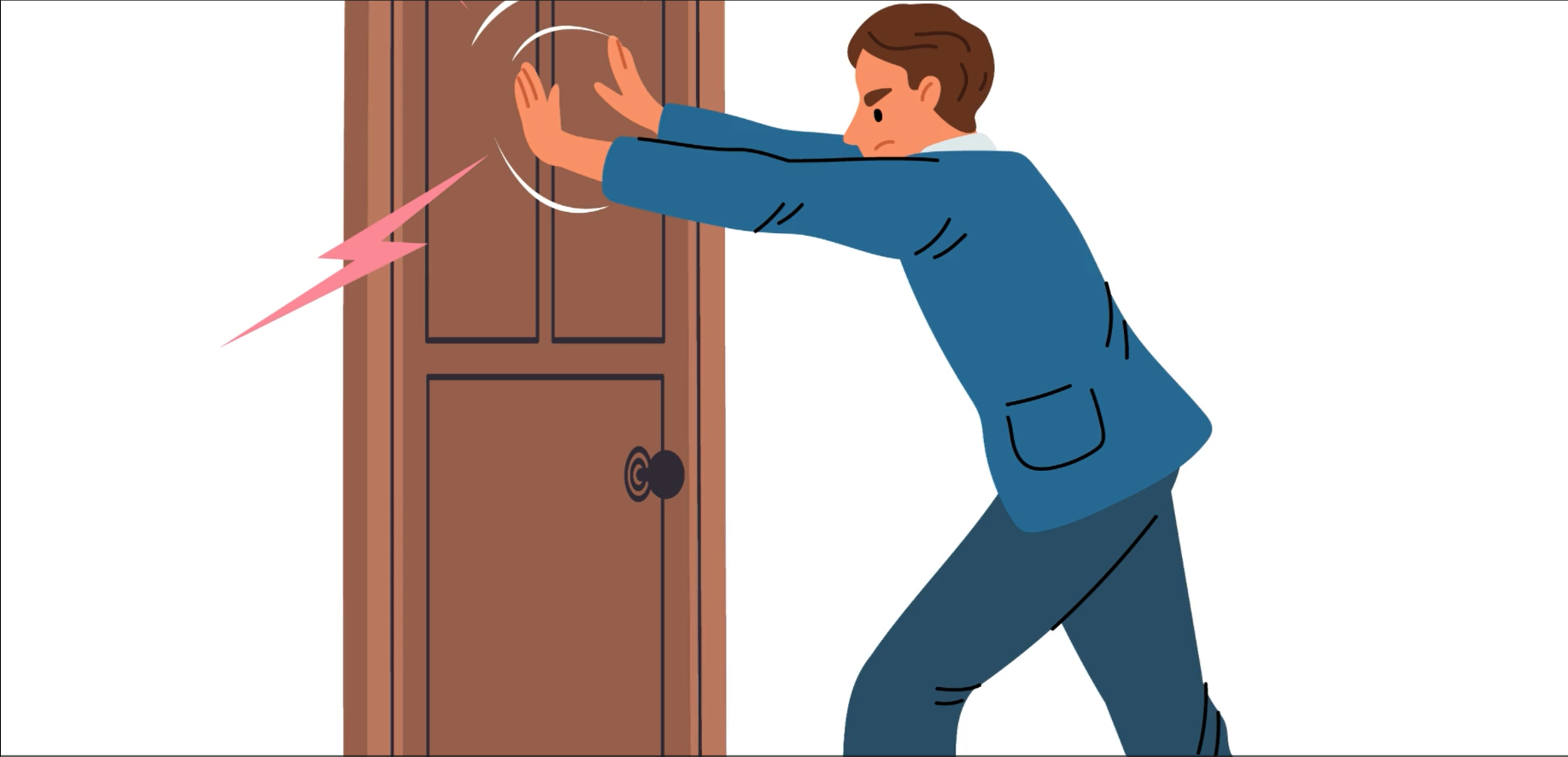
Their voice goes tight in a way that doesn't sound like love, even though somewhere underneath it probably is. Your chest goes hot in a way that doesn't feel like disrespect, even though that's how it lands. A door closes harder than you meant it to. The floor practically flinches.
Here's the thing nobody tells you: that moment isn't actually about the phone, or the curfew, or whatever the "official" topic was. If you're trying to figure out how to fix a fight with your parents without just swallowing it or losing every time, the good news is it's a skill — one you can actually get better at, not something you either have or don't.
What You're Actually Fighting About (It's Rarely the Rule Itself)
Strip away the curfew or the screen-time rule for a second. What's really going on when you're furious at 9 pm on a Tuesday?
Usually it's this: life feels like it's happening somewhere else, and you're locked out of it. There's a group chat moving without you, a test tomorrow you don't fully get, a version of belonging that lives entirely on a screen — and every "put it away" feels like being cut off from your own life, not just your phone.
On the other side, your parent isn't actually losing sleep over an app. They're picturing you exhausted at breakfast, dragging yourself through a day you're not ready for. Their sharper tone is a clumsy attempt at building a fence around a future they can't control. It's badly aimed worry, not proof they don't trust you.
Neither of you is wrong about what you want. You want a say in your own life. They want reassurance you'll be okay. You're just arguing in different languages, both convinced the other one isn't listening.
Right After the Slam: What Actually Helps (And What Doesn't)
The ten minutes right after a blow-up are almost never the right time to fix anything — no matter how much your brain wants to keep arguing in your head, or send the text that finally "wins." Your hands might be shaking. Your thoughts might be doing that thing where they refuse to make a single argument feel less enormous. That's adrenaline, not clarity.
This is where a lot of people get it backwards: staying quiet isn't losing, and pausing isn't weakness. If yelling gets louder, if doors start feeling like targets, or if anything about the moment feels genuinely unsafe — that's not a "cool down and try again" situation, that's a "get another adult involved" situation, and reaching out then is strength, not defeat.
But on a normal, heated, nobody's-actually-in-danger night? Cold water on your face. A lap around the block. Even just closing your eyes for ten seconds. None of it solves the actual disagreement. It just gets you back to a version of yourself who can actually have the conversation that fixes things, instead of one that makes it worse.
The Conversation That Actually Moves Something
If your parent knocks instead of walking straight in, that's usually them trying, awkwardly, to offer you the room to reset — take it if you can. You don't have to forgive anything in that moment. You just have to let the temperature drop a notch.
The conversations that actually go somewhere aren't speeches. They're one honest sentence each, said plainly:
"I need some say in this — it feels awful having a rule just dropped on me." "I need to know you're getting enough sleep — school doesn't let up, and I worry."
Neither of those is a trap or a gotcha. They're just true. And the follow-up question that tends to crack something open isn't "why won't you let me" — it's asking what they're actually afraid of. You might be surprised that the honest answer isn't "you'll do something bad." It's usually closer to "I won't be able to help you if something goes wrong."
The Best Repair Conversations Rarely Happen Face-On
If you ever get the chance, try having the real conversation while doing something else — walking to the shops, sitting side by side rather than across a table, anything that means you're not staring straight at each other. It sounds small, but not having to hold eye contact takes a surprising amount of pressure off, and words come out easier when you're not braced for a reaction.
That's usually where you can actually say the honest, slightly embarrassing thing: "I can't talk when I'm still fired up — my brain just goes blank and I say things I don't mean. Can I get ten minutes next time, not to disappear, but to actually come back and finish this properly?"
That one sentence does more than a week of silent treatment ever could, because it turns "space" from something vague and worrying into something with a clock on it. A promise beats a mystery every time.
From there, the actual rule can become something you both revisit — not a verdict carved in stone, but a trial. Phone goes on charge earlier the night before training, later on other nights, and you check back in on it in two weeks. Rules that are allowed to change stop feeling like something to fight.
The Small Habits That Make the Next Fight Less Explosive
You don't need a "family meeting" to make this stick. What actually works is smaller and less awkward than that: a quick two-minute check-in after dinner, where either of you can say "that felt fair" or "that one didn't, actually." It's not a summit. It's just enough to stop a bad week from turning into a bad month, and it's honestly one of the easiest ways to fix a fight with your parents before it even becomes one.
It also helps more than you'd expect when a parent admits they came in too hard — that worry made them loud, not logic. That's not them losing authority. If anything, it's proof the relationship can bend without breaking, which makes it easier for you to admit your own part too.
Some families even keep a running note somewhere — what actually helps in the heat of it (cold water, a walk, a knock instead of a text) and what doesn't (jokes, at least not in the first five minutes). It's not corny if it saves you both from having the same fight from scratch every time.
The Part Worth Remembering
The kettle's still going to be too loud sometimes. Your phone's still going to light up mid-conversation. You're still going to want more freedom than feels like it's on offer, and they're still going to worry more than feels proportional. That doesn't go away — and it doesn't need to.
What changes is whether the house knows how to come back together after the door closes. Not perfectly, not every time, but consistently enough that a slammed door stops feeling like the end of something and starts feeling like a pause before a better sentence.
You have more say in how you fix a fight with your parents than it feels like in the moment. The fight was never really the problem. Not having a way back from it was.
GSR Tips & Tricks
How best to use Goalstar Rewards to help your child achieve their goals? How It Works
Enjoy 4 weeks of free trial for each child. Register to Start 4 Weeks Free Trial!
Another highly effective study tool for teenagers: Goalstar Rewards - Study Assistant. Enjoy 2 weeks of free trial. Register to Start 2 Weeks Free Trial!
Here is an article for parents on how to deal with their Teens to manage conflicts:
•Conflict Management with Pre-teens and Teens
